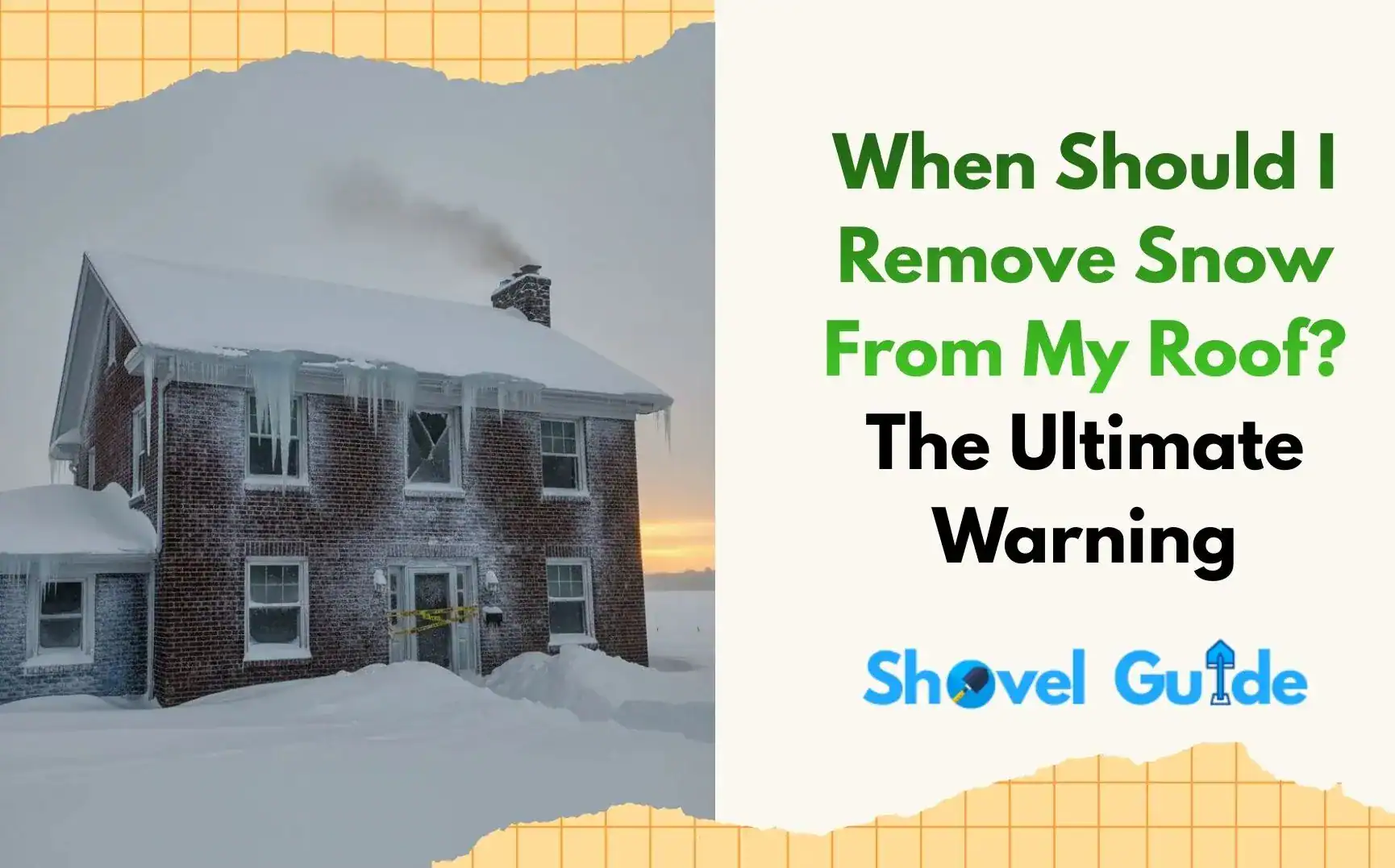
I had just brewed coffee when a baseball-sized drop of cold water hit the back of my neck. I looked up; the kitchen ceiling bulged like a water balloon. Two hours later, I was staring at a sagging rafter and a $9,400 insurance deductible. All because I assumed the fluffy white stuff on my roof was harmless. Spoiler: it wasn’t.
That day taught me a brutal lesson. If you ignore the question “Should I remove snow from my roof?”, you’re inviting trouble. Sooner or later, the snow will find its way inside on the worst possible afternoon.
You should remove snow from your roof when it builds up enough to strain the structure or cause ice dams, especially after heavy or wet snowfall.
Should I Remove Snow From My Roof? (Quick Answer)
Yes—if the load exceeds your roof’s safe limit or if ice dams are forming. No—if the snow is light, fluffy, and your roof was engineered for your region’s worst-case snowpack. The rest of this guide shows you exactly how to decide in under two minutes.
When Removing Snow Is Necessary
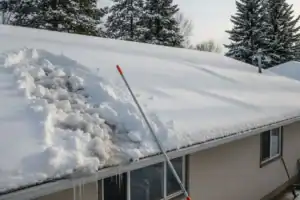
- Wet, heavy snow over 6 in. on low-slope or flat roofs
- Any ice dam thicker than 1 in.
- Doors suddenly stick, cracks appear in drywall, or you hear new creaking at night
- Local weather flips above freezing during the day, then back below at night (freeze–thaw cycle)
When Leaving Snow Alone Is Safe
- Light, powdery snow under the depth limits in the table below
- Outside temps stay well below 32 °F with no thaw in the 10-day forecast
- Your roof is brand-new, code-built for 50 lb/ft² ground snow load, and has steep pitch (8/12 or steeper)
A Quick Roof-Type & Snow-Depth Decision Table
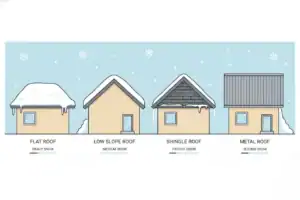
Roof Style | Light Snow (lb/ft³) | Heavy/Wet Snow (lb/ft³) | Action |
Flat / 2-slope | < 4 in. | < 2 in. | Remove at once |
3/12–5/12 low slope | < 6 in. | < 3 in. | Monitor daily |
6/12–8/12 asphalt | < 12 in. | < 6 in. | Usually safe |
9/12+ metal | < 18 in. | < 10 in. | Self-sheds; watch valleys |
*Assumes 30 lb/ft² design load. Halve these limits if your rafters span > 16 ft or your home is pre-1970.*
Why Roof Snow Matters: Real Risks Most Homeowners Overlook
Roof Snow Load: How Snow Weight Stresses Your Roof
Fresh powder weighs about 7 lb per cubic foot. One week later, the same snow has melted, refrozen, and now packs 25–35 lb into the same space. Multiply by the size of your roof, and you can exceed the design load without ever seeing “a lot” of snow.
The Insurance Institute for Business & Home Safety (IBHS, 2022) found that 84 % of winter roof collapses happen on roofs younger than 15 years. This shows that roof age matters less than changes in snow or ice weight, which most owners never track.
Ice Dams & Water Damage (The Hidden Threat)
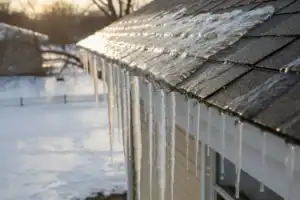
When warm attic air melts the bottom snow layer, water runs to the eave, refreezes, and backs up under shingles. That backup can dump gallons into wall cavities. According to the University of Minnesota Extension (2021), the average ice-dam claim tops $9,600—and most policies only cover “sudden collapse,” not slow leaks.
Gutter Damage, Sagging, Leaks, and Indoor Moisture Issues
Gutters bear more weight than most homeowners realize. Ice can add hundreds of pounds along a single eave, bending brackets or tearing gutters off completely. Once that happens, water pours directly onto fascia and soffits, seeping into wood and insulation. Early warning signs include sagging edges, ice bulges, peeling paint, or small leaks near corners. Address these cues early, and you’ll avoid major rot, costly repairs, and that musty smell that spreads through the house.
When Snow Can Actually Help (Insulation in Some Climates)
Not all snow is a threat—sometimes it’s a free thermal blanket. A 6-inch layer of dry, fluffy snow on a well-ventilated attic can add R-6 to R-10 of insulation, reducing heat loss up to 10%. This works best in consistently cold regions where the snow doesn’t melt quickly. Don’t expect this benefit in warm or wet climates; the snow may turn to ice and create ice dams instead. The key is keeping the outer layer cold while the attic is properly ventilated.
How Much Snow Is Too Much? (Use These Thresholds)
Snow Depth Guidelines (Light, Moderate, Heavy, Wet Snow)
Using a Simple Snow-Load Calculator
- Measure snow depth in inches.
- Grab a plastic cup, pack snow, weigh it, subtract cup weight, and note ounces.
- Multiply ounces by 0.06 = lb/ft³ density.
- Multiply density by depth (inches) ÷ 12 = load (lb/ft²).
- Compare to your roof’s design load (check building plans or local code).
How Roof Pitch, Age, and Material Change the Threshold
- Flat roofs: 0/12–2/12 hold 100 % of the load.
- 6/12 pitch sheds roughly 25 % of the weight through sliding and sublimation.
- Metal sheds up to 60 % on pitches ≥ 8/12.
- Pre-1960 rafters are often #2 spruce spaced 24 in. o.c.—25 % weaker than modern #2 southern pine at 16 in. o.c.
Warning Signs Your Roof Is Overloaded Right Now
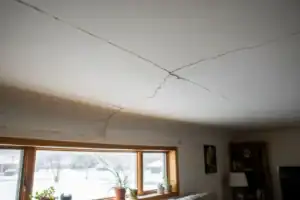
- Interior doors rub, or the latch fails.
- New cracks along drywall seams above windows.
- Bowed ceiling line visible from the street.
- Loud “pop” at night followed by creaking.
- Visible rafter sag in the attic (shine flashlight across the bottom edge).
Roof Types That Do and Don’t Need Snow Removal
Flat Roofs (Highest Risk)
Engineering tables show a flat 1,000 ft² roof with 8 in. of wet snow carries 15 tons—equal to parking a UPS truck overhead. Remove at 4 in. or install a roof-top snow-melt system.
Low-Slope Roofs
Anything under 4/12 behaves almost like a flat roof. Use a roof rake from the ground after every 6 in. of powder or 3 in. of heavy snow.
Asphalt Shingle Roofs
Granules protect against UV; scraping them off with a shovel cuts shingle life in half. Always leave 1–2 in. of snow as a buffer.
Metal Roofs (Self-Shedding)
Great—until a 300-lb sheet slides off like a guillotine. Install snow guards every 24 in. above walkways and garage doors. Otherwise, let gravity work, but keep valleys clear.
Older Homes With Structural Weaknesses
If your attic has 2×4 rafters spliced mid-span or you find rafter ties missing, halve the depth limits in the table above.
Newer Homes in Snow Zones Built to Withstand Heavy Snow
Homes built after 2000 in snow states follow ASCE 7-22 and handle 50–70 lb/ft². You can usually wait until 18–24 in. of dense snow before acting.
When You Should Remove Snow (Situations to Act Fast)
After a Heavy, Wet Snowstorm
This kind of snow is wet, heavy, and can snap tree branches. If your local weather mentions a “snow-to-water ratio of 6:1” or higher, take action fast. Clearing it manually can be exhausting, so consider finding help—here’s guidance on who can shovel my driveway.
Even a few inches on a low-slope roof can stress the rafters, create ice dams, and increase the risk of damage. Check your roof and edges within hours after the storm.
When Freeze–Thaw Cycles Are Creating Ice Dams
If daytime temps rise above freezing and night temps drop below 32 °F, your roof could form ice dams. Melted snow refreezes at the edges, backing up under shingles. This often creates compacted, icy piles on the ground that are tough to move—see how to shovel frozen snow fast for techniques that work on this stubborn stuff.
Icicles thicker than a soda can are a warning. Remove them quickly, or water can leak into walls and ceilings.
When Your Attic or Ceilings Show Moisture Spots
Look for brown, football-shaped stains on ceilings or corners near windows, chimneys, or vents. These are early signs of leaks. Catching them early prevents mold, ruined insulation, and bigger repairs later.
When Doors Start Sticking or Walls Bow Slightly
Doors or windows that suddenly rub or stick show that the roof might be under stress. I noticed this in my bedroom the same morning a rafter cracked. Openings often show problems first—inspect all doors and walls after heavy snow.
When Snow Drifts Pile on One Area of the Roof
Wind can push snow into drifts, piling three times more snow near chimneys or dormers. These heavy spots twist trusses and can cause roof collapse. Check for uneven snow and remove drifts first.
When You Should Not Remove Snow (Avoid These Mistakes)
When the Snow Is Light, and the Roof Is Designed for Load
Fluffy snow on a strong roof doesn’t always need removal. Ten inches on an 8/12 asphalt roof? Usually fine. Removing it can scratch shingles or waste energy. Always measure snow weight first, not just guess.
When Removal Is More Dangerous Than Leaving It
Steep roofs, sheet ice, or slippery conditions are too risky. A 12/12 roof with ice? Don’t try it yourself. Wait for safer weather or hire professionals—they have the right tools and safety gear.
When Scraping Down to Shingles Might Cause Damage
Even plastic shovels can scrape granules off shingles if pressed hard. That one scrape can age shingles by years. Leave a thin layer of snow and pull gently—never scrape sideways.
When Removing Snow Could Break Ice Seals on New Roofs
New shingles have little asphalt beads that seal themselves. Pulling snow off too aggressively in cold weather can break them, making shingles vulnerable to wind and water. Wait for shingles to cure, or hire a pro.
How to Remove Roof Snow Safely
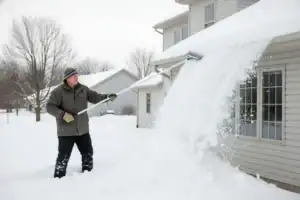
Removing roof snow safely involves minimizing the risk of injury and preventing damage to the roof. Use a long, non-metal snow rake while standing firmly on the ground, clearing small amounts at a time. Work from the roof edge upward, and avoid scraping directly against shingles. Once the snow hits the ground, you’ll likely need to clear your driveway or walkways—here’s how to shovel a driveway like a pro.
Never climb onto an icy roof, and avoid standing below heavy overhangs where snow or ice could fall. If snow is deep, the roof is steep, or ice dams are forming, it’s safer to call a professional who has the proper equipment.
Safety Precautions If You Absolutely Must Use a Ladder
Use a stabilized ladder at a 75 ° angle, secured with a ladder hook at the ridge. Wear a helmet, harness tied to a roof anchor, and never reach more than 1 ft side-to-side.
When to Call a Professional Instead
- Thick Ice Dams You Cannot Reach: Steam is the only safe removal. Pros charge $400–$700 per hour but save $5,000 tear-off.
- Heavy, Dense Snow Too Dangerous for DIY Removal: If the snow-load calculator says you’re 20 % over design, hire a crew with aerial lifts and fall-arrest rigs.
- Multi-Level or Complex Roof Designs: Valleys, crickets, and solar panels create fall hazards. Pros carry a million-dollar liability and workers’ comp.
Snow Removal Liability & Insurance Considerations
Insurance only covers sudden roof collapse, not slow leaks from ignored ice dams. Claims can be denied if you act unsafely or fail to document maintenance. Subrogation happens when your insurance company pays you for damages and then goes after the contractor who caused them to get their money back. Hiring insured professionals transfers risk and protects your wallet and health.
Preventing Roof Snow Problems Before They Start
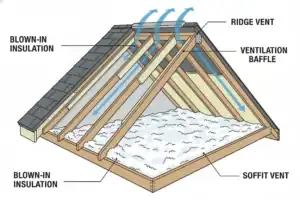
Improve Attic Insulation & Ventilation
Upgrade to R-49–R-60 cellulose or blown fiberglass. Keep the attic within 10 °F of the outdoor temp, and ice dams disappear.
How to Stop Warm-Air Leaks That Melt Snow Unevenly
Seal plumbing stack and chimney chases with fire-rated spray foam. Weather-strip attic hatch. The average leak equals a 6-inch-square hole (DOE 2020).
Gutter Maintenance Before Winter
Clean gutters after the last leaf drop. Install gutter guards if you have pine needles. Proper off-season storage keeps your snow tools in top shape—see how to store shovels and rakes properly.
Snow Guards, Heat Cables, and Other Prevention Tools
Snow guards cost $4–$6 per foot installed and break big slides into harmless chunks. Self-regulating heat cable in valleys and along eaves adds $500–$800 for a 1,500 ft² roof.
Roof Upgrades for Long-Term Winter Protection
Consider 50-year architectural shingles, synthetic underlayment, and ice-barrier membrane 6 ft up from the eave. Pay once, relax for decades.
After You Remove Snow: What to Check Next
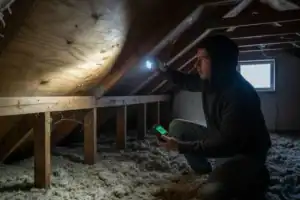
Checking Attic Moisture After a Snow Event
Hidden humidity is a silent threat. Look behind knee walls, near chimneys, and roof-to-wall junctions. Anything above 60% RH for 72 hours invites mold. Early signs include musty odors, dark spots, or clumped insulation. A $25 hygrometer and occasional attic scans are inexpensive ways to catch problems before they escalate.
Winter Roof Care Checklist
✅ Snow-load calc after every 6 in. snowfall
✅ Visual attic scan monthly
✅ Humidity < 50 %
✅ Gutters flow when tested with a hose
✅ Snow guards are tight
✅ Emergency pro crew phone number saved
Regional Context: Do All Homes Need Roof Snow Removal?
- Heavy-Snow Regions: Building codes require a 70–100 lb/ft² design load. Still, ice dams thrive because of attic heat. Remove when wet snow hits 12 in. or any ice dam forms.
- Moderate-Snow Regions: Codes vary 30–50 lb/ft². Wet snow at 8 in. or any structural sign = action.
- Rare-Snow Regions: Codes may be 20–25 lb/ft². One wet 10-inch dump collapses carports and sunrooms every few years. Treat 6 in. of wet snow as a danger zone.
ASCE 7-22 maps Ground Snow Load (pg) for every county. A stamped structural plan trumps everything—check yours before you decide.
Decision Flowchart: Should YOU Remove Snow From Your Roof Today?
Quick Yes/No Decision Tree Based on Your Situation
- Did wet snow fall in the last 24 h? → Yes → Measure depth.
- Depth > table limit? → Yes → Remove.
- Any ice dam > 1 in.? → Yes → Remove.
- Doors stick, cracks appear? → Yes → Remove & call pro.
- None of the above? → No → Enjoy cocoa.
“If X, Do This” Step-By-Step Summary
- If the roof is flat and the snow is 4 in. → remove now.
- If asphalt 6/12 and 10 in. light snow → leave it.
- If metal 10/12 and 12 in. → install guards, leave snow.
- If any sag, crack, or leak→ evacuate, call the engineer.
FAQs
How often should you remove snow from your roof?
Only when the load nears your roof’s design limit—usually every 1–3 weeks in heavy-snow regions, or after each wet storm.
How much snow can my roof hold?
Check your structural plan. Typical modern homes support 30–50 lb/ft², equal to 14–24 in. of heavy snow or 6 in. of ice.
Is roof snow removal worth the cost?
A $250 rake beats a $12,000 rebuild. Professional steaming at $600 is still cheaper than interior water damage, averaging $9,600.
What is the safest way to remove roof snow?
From the ground with a plastic-bladed roof rake, leaving a 1–2 in. layer, wearing a helmet and eye protection.
Do metal roofs need snow removed?
Usually, no; they shed automatically. Install snow guards and keep valleys clear instead.
Should I remove snow if I live in a light-snow area?
Yes, if a rare wet storm drops 6+ in. or ice dams form—regional rarity often means lighter roof designs.
Final Thoughts
I still get a knot in my stomach when the first heavy flakes stick. But that anxiety vanished the day I started measuring instead of guessing. Grab a ruler, plug in the numbers, and let data—not panic—decide. Clear snow off your roof when the numbers say it’s needed, and leave it when the numbers say it’s safe. That way, you won’t have to watch water dripping from your lights while waiting months for a busy contractor.


